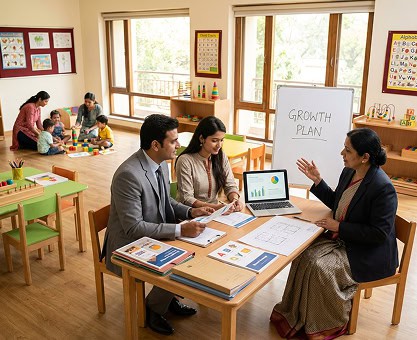
Establishing a preschool in India in 2026 will involve more than just building a classroom; it will involve developing an early childhood education program that fosters curiosity, self-assurance, and compassion. Preschools today are expected to provide structured yet enjoyable learning experiences due to the growing awareness among parents and the strong push of NEP 2020.
In order to create a preschool that is both meaningful and long-lasting, this guide walks you through every step of the process, from planning and setup to curriculum, staffing, and day-to-day operations.
Table of Contents
1. Why Starting a Preschool in India Makes Sense in 2026?
2. Choosing the Right Preschool Model
3. Location, Infrastructure, and Setup
4. Curriculum Planning and Learning Approach
5. Hiring and Preparing the Right Teachers
6. Legal Requirements and Registrations
7. Designing a Preschool That Children Love
8. Investment and Cost to Start a Preschool
9. Managing Daily Operations Efficiently
10. Marketing and Building Parent Trust
11. Franchise or Independent Preschool?
12. Bringing It All Together
13. Frequently Asked Questions
1. Why Starting a Preschool in India Makes Sense in 2026?
In India, there is an increasing need for high-quality early learning environments. Preschools are now a need rather than a luxury due to nuclear families, working parents, and growing awareness of early childhood education.
In India today, parents actively seek out schools that provide:
• A robust curriculum for early childhood education
• Learning via play and exploration
• Safe, nurturing surroundings
• Social and emotional growth, in addition to academic
For entrepreneurs who wish to create value-driven preschools, this change has created a plethora of opportunities.
2. Choosing the Right Preschool Model
Determining the type of learning experience you want to provide is crucial before you set up your preschool. Today, the majority of prosperous preschools are based on an NEP-aligned curriculum, which guarantees that kids build solid foundations free from academic pressure
In order to simplify planning and preserve consistency, particularly in the early phases, many founders start with a ready-to-use preschool curriculum package in India.
3. Location, Infrastructure, and Setup
Preschools don’t have to be big; they just need to feel secure, friendly, and kid-friendly.
In India, residential communities are home to the majority of successful preschools.
• On the ground floor or in easily accessible buildings
• In serene, low-traffic areas
A small to mid-sized preschool typically needs between 1,500 and 2,000 square feet to start. The space’s thoughtful design for young children is more important than its size.
A well-designed preschool environment promotes comfort, freedom of movement, and interaction while supporting the holistic development of young children. Bright, kid-friendly classrooms with age-appropriate learning resources that encourage experimentation rather than limitation are ideal.
4. Curriculum Planning and Learning Approach
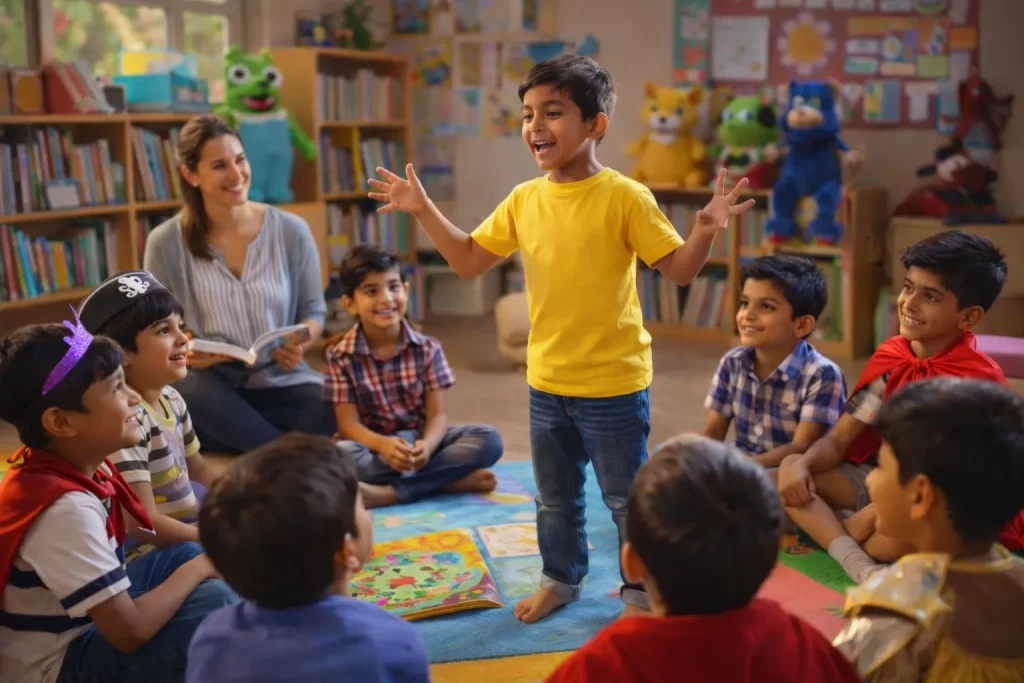
The way that learning takes place in the classroom is closely linked to the identity of a preschool. In 2026, parents have a strong preference for an activity-based learning approach that uses games, stories, movement, and interaction to teach kids.
Daily classroom activities should naturally support:
• Language exposure
• Early numeracy
• Emotional expression
• Cognitive and motor skill development
To keep activities meaningful and developmentally appropriate, many preschools rely on structured plans from a preschool curriculum kit in India.
5. Hiring and Preparing the Right Teachers
The foundation of any preschool is its teachers. Using teacher-ready curriculum kits in the beginning enables teachers to confidently deliver lessons while retaining creative flexibility.
Additionally, the founders fund:
• An Indian teacher certification and training program
• Online professional development for teachers in India
In addition to enhancing classroom quality, this gives parents peace of mind regarding teaching standards.
6. Legal Requirements and Registrations
Legal compliance is necessary to start a preschool in India, which includes:
a) Registering your business (Trust/society/private limited company)
b) Acquiring a local trade license
(c) Fire and safety clearance
d) Ensuring Child safety & hygiene standards.
Although preschools does not need to be affiliated with CBSE/ICSE, they must comply with all early childhood care standards to be considered a reputable institute of learning.
7. Designing a Preschool That Children Love
Children learn best in an environment that stimulates their curiosity.
An ideal learning environment for Preschool would consist of the following:
i) Bright and Open Classrooms
ii) Activity/Exploration Area
iii) Age-appropriate Children-sized furniture
iv) Toys and Learning Materials that are Safe to Use
v) Facilities that are Clean and ensure Privacy
Preschools that focus on learning through exploration move away from rigidly designed seating to many opportunities for children to move, interact, and discover through play. This is one of the core ideologies of the Hubble Explorers program.
8. Investment and Cost to Start a Preschool
| Expense Area | Estimated Cost |
| Infrastructure & interiors | ₹3–6 lakhs |
| Learning materials & toys | ₹1–2 lakhs |
| Legal & registrations | ₹50,000+ |
| Staff salaries (initial) | ₹1–2 lakhs |
| Branding & marketing | ₹50,000–₹1 lakh |
Total investment typically ranges between ₹5–20 lakhs, depending on scale and location.
9. Managing Daily Operations Efficiently
A preschool requires the smooth handling of admissions, fee collection, attendance tracking, staff coordination, and regular communication with parents. To manage these processes efficiently from day one, many new preschools adopt a Preschool LMS or an integrated school management system that keeps daily operations organised without adding complexity.
As the preschool grows, a well-designed LMS becomes even more valuable—supporting planning, reporting, and communication while still allowing the flexibility needed to stay focused on children and learning, not administration.
To help founders experience this first-hand, Hubble Explorers offers a 44-day free trial of its Preschool LMS, giving you the freedom to explore, test, and streamline your operations before making any long-term commitment.
Explore our Preschool LMS with a 44-day free trial →(clickable)
10. Marketing and Building Parent Trust
Parents select early childhood education based on trust and information sharing. When parents receive a good understanding of their preschool philosophy, safety measures, and developmental approach, it significantly influences their decision to enroll.
Open houses, sample classes, and open communication are good ways for preschool companies to build trust with parents and show that they have a solid foundation in early childhood education.
11. Franchise or Independent Preschool?
The decision between franchise vs independent preschool can be one of the biggest decisions for a preschool owner and operator. While franchise preschools will have name recognition and established systems, they also come with predefined business structures, multiple ongoing fees, and limited opportunity for growth beyond the franchise model.
Conversely, independent preschools provide owners/builders the opportunity to create their vision for education.
The flexibility to create an NEP-compliant curriculum or flexibly develop a child-centered curriculum to meet the local community’s needs increases emotional and cultural attachment to your school within the local community.
Long-term, independent preschools cost less because they do not involve ongoing royalties and renewal fees.
Therefore, if you’re passionate about igniting curiosity in children through early learning, then creating an independent preschool will become your mission and vision.
Hubble Explorers is rooted in curiosity and exploration, where children are encouraged to lead their own learning journey while being supported by a strong educational foundation. At the heart of it is the Hubble Explorers ready-to-use preschool curriculum, thoughtfully designed to align with early learning goals and age-appropriate development.
Beyond curriculum, Hubble Explorers offers an end-to-end preschool solution—supporting founders at every stage with preschool setup guidance, learning material planning, teacher training, and ongoing marketing and branding support. This integrated approach allows educators and entrepreneurs to focus on what truly matters: creating meaningful early learning experiences for children.
As such, an independent preschool based on curiosity and exploration is incredibly satisfying for those who want to shape how children learn, where they learn, and ultimately, who they will become.
12. Bringing It All Together
By choosing to open a preschool in India in 2026, you will embark on an exciting path combining purpose and preparation. If you create a strong early learning programme centred on developing foundational skills, an NEP-aligned preschool curriculum, an emphasis on active, experiential learning, as well as comprehensive early childhood development approaches, you will naturally gain parental trust in your preschool.
This foundation sets the stage for building a preschool that fosters children’s success and provides parents with peace of mind about their child’s early education.
13. Frequently Asked Questions
1. What is the NEP for preschool?
The National Education Policy (NEP) 2020 includes preschool under the foundational stage of education for children aged 3–8 years. It promotes play-based, activity-led learning with a focus on language, early numeracy, social skills, and emotional development, without formal exams or academic pressure.
2. What qualifications do I need for a preschool teacher?
Preschool teachers in India typically need Nursery Teacher Training (NTT), Montessori, or ECCE certification. Along with formal qualifications, patience, creativity, and an understanding of child psychology are essential. Many schools also encourage ongoing teacher training to stay aligned with NEP guidelines.
3. How do I run a successful nursery and primary school?
A successful nursery or primary school is built on a strong curriculum, trained teachers, safe infrastructure, and clear communication with parents. Consistent routines, child-friendly learning methods, and efficient management systems help maintain quality and trust over time.
4. Is a preschool franchise profitable in India in 2026?
A preschool franchise can be profitable in India in 2026, especially in areas with high demand. However, independent preschools often benefit from lower long-term costs, greater flexibility, and stronger local connections. With a well-planned learning model and clear vision, both formats can succeed